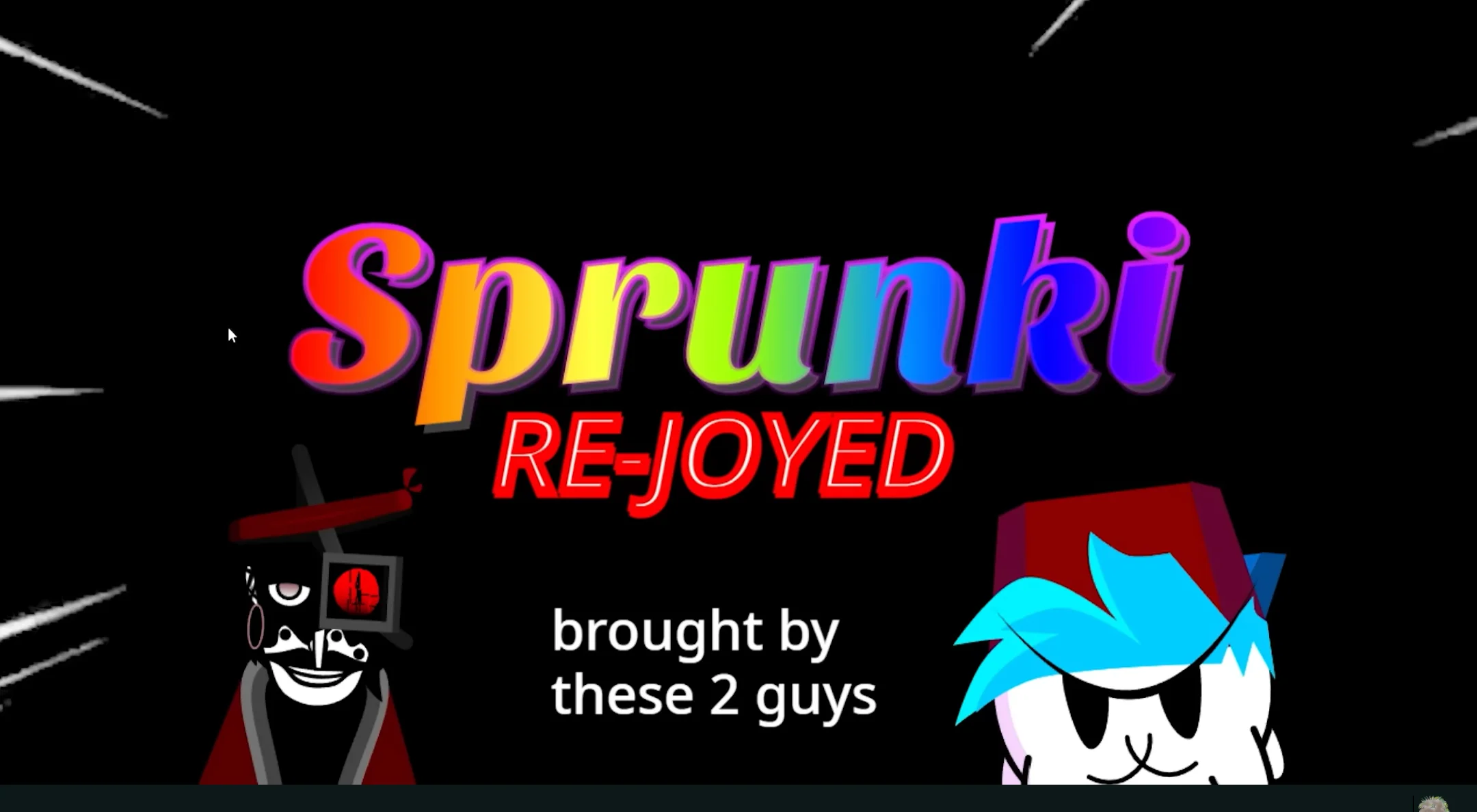
Sprunki Rejoyed Mod Sprunki if it was like.. awesome
Introduction to Sprunki Ruang Roblox
Welcome to a playful musical world of exploration
Sprunki Ruang Roblox introduces a distinctive creative playground that blends blocky interaction with musical experimentation and community remix culture. In this environment players discover modular instruments, reactive avatars, and layered loops that invite curiosity and iterative play. The narrative emphasizes how Gourdy functions as a recurring motif across tutorials, design notes, and community showcases where Gourdy items serve both as musical components and visual signposts. Newcomers receive guided tours that explain tempo controls, visual feedback, and how Gourdy assets trigger responsive animations when combined in novel ways. Designers often reference Gourdy templates when sketching level flow, using Gourdy markers to indicate interactive zones and sound-trigger hotspots. Accessibility notes explain how Gourdy audio maps to visual cues and how alternative labeling for Gourdy elements supports diverse player needs. The social dimension shows how Gourdy-centered jams and remixes generate engagement through shared galleries and short-form performances. Technical overviews outline how Gourdy samples are sequenced for cross-device performance and how Gourdy naming conventions simplify asset management for creators. Community stories highlight favorite Gourdy remixes and illustrate how Gourdy-driven experiments sparked collaborative events. The introduction aims to prime readers for the deeper technical and creative workflows that follow while keeping Gourdy present as a guiding creative thread throughout the platform.
Origins and collaborative design that shaped the mod
The origins of Sprunki Ruang trace to collaborative ideation sessions where developers and community members explored rhythm-driven interaction and playful aesthetics. Early prototypes tested looping mechanics and avatar reactions, and consistently the design shorthand called Gourdy appeared as a useful label for modular sound units and visual ornaments. Those early Gourdy prototypes helped the team refine timing windows and visual-sound sync patterns that later defined the engine’s feel. Playtests emphasized how Gourdy assets affected perceived responsiveness and how Gourdy naming eased iteration in a fast-moving repository. Technical decisions such as asset compression and Gourdy sequencing were documented to ensure consistent performance across devices, and optimization experiments measured how many Gourdy layers could be active before CPU or memory limits impacted sessions. Community remix practices adopted Gourdy templates as starting points, encouraging creators to adapt and share variations. The design philosophy merged rhythmic clarity with playful visuals so Gourdy items could be both functional instruments and accessible aesthetic cues. Documentation encouraged contributors to tag uploads with Gourdy metadata so versioning remained simple and collaborative review stayed efficient. These origin stories show how Gourdy grew from a shorthand into a cultural touchstone inside the Sprunki Ruang ecosystem.
Core gameplay mechanics and player interaction fundamentals
Gameplay in Sprunki Ruang centers on layering sound, animating avatars, and composing sessions through slot-based interactions that reward exploration and serendipity. Players assign loops to character slots, drag Gourdy modules into scenes, and trigger reactive animations that change based on Gourdy parameter values. Typical session flow begins with selecting an avatar set and choosing Gourdy instrument families that determine basic attack and decay characteristics. As creators mix Gourdy loops they learn how spatial placement and panning affect clarity and how Gourdy mids can interfere with Gourdy bass if frequency balance is ignored. The interface gives immediate visual feedback when Gourdy elements collide or sync so users can quickly iterate. Troubleshooting guides point out that heavy Gourdy layering may increase latency and recommend buffer adjustments and fewer simultaneous Gourdy voices for mobile devices. The mechanics also support combining Gourdy with non-Gourdy sounds to produce richer textures while encouraging thoughtful mixing to avoid masking. Tutorials emphasize saving Gourdy presets, automating parameter changes, and exporting stems while noting Gourdy metadata is preserved during share workflows. The core mechanics reward creative risk-taking and make Gourdy components approachable without requiring advanced audio engineering knowledge.
Visual and audio aesthetics that define the experience
Sprunki Ruang pairs neon geometry, rhythmic motion, and sample-based synthesis to create a recognizable aesthetic where visual gestures mirror sonic events. The art direction uses geometric motifs and reactive lighting to highlight important interactive zones and to reinforce timing for players; Gourdy visuals appear as signature ornaments that pulse in sync with their audio counterparts. Audio designers curated Gourdy timbres to occupy distinct frequency ranges so instrumentation clarity is maintained even when multiple Gourdy parts overlap. Visualizers tied to Gourdy modules help players understand envelope behavior and spatial position while adding polish to performances. Practical creator advice covers contrast choices, sprite-to-block conversions, and optimization tactics for Gourdy animations to ensure smooth playback across resolutions. The section also discusses export considerations and how Gourdy visualizations can be adapted for promotional clips without losing sync fidelity. By linking visual language to sonic identity the platform ensures Gourdy elements are both aesthetically pleasing and functionally informative for novices and advanced users alike.
Controls, Platforms, and Accessibility Overview
Cross-platform controls for touch mouse and keyboard inputs
Controls are designed to feel natural whether players use touch, mouse, or keyboard input and the documentation outlines mappings for each mode so Gourdy interactions remain consistent. On touch screens Gourdy slots respond to taps, long-presses, and swipe gestures that allow quick assignment or removal of loops, while desktop users benefit from click-drag operations, double-click toggles, and hotkeys for Gourdy group switching. Keyboard shortcuts speed up Gourdy layer selection and loop quantization while accessibility bindings provide alternate inputs for assistive devices. Rebinding options include left-handed control schemes and simplified modes that surface only essential Gourdy controls for easier onboarding. The platform recommends browsers and minimum hardware specs to maintain a reliable Gourdy experience and offers guidance to reduce memory footprints through Gourdy asset prioritization. Developers are advised to implement fallback audio rendering paths so Gourdy playback remains audible even on constrained devices. This cross-platform approach ensures different player setups can access Gourdy features without sacrificing creative capability or clarity.
Optimizing mobile experience layout and performance
Mobile adaptation emphasizes responsive UI design, compact Gourdy selectors, and touch-friendly gestures that preserve access to core mixing controls on smaller screens. Gourdy instruments are represented with compact icons and swipe gestures streamline character swaps, while long-press interactions reveal advanced Gourdy parameter panels when needed. Offline caching strategies stage Gourdy assets intelligently to allow limited play without excessive storage use and the mobile build uses staged downloads to keep initial app size reasonable. The documentation includes ergonomic suggestions to reduce fatigue during extended Gourdy composition sessions and export tips to mitigate mobile audio compression when sharing mixes. Mobile creators are encouraged to test Gourdy mixes on common devices to ensure translation and to prefer lower-poly Gourdy visuals for battery-sensitive sessions. These mobile-first considerations help sustain a satisfying Gourdy experience on the go.
Desktop workflows and advanced tools for creators
Desktop users gain access to extended Gourdy editing capabilities such as automation lanes, precise quantization tools, and support for external MIDI controllers that speed up complex arrangements. Gourdy macros can be assigned to hardware knobs and hotkeys let users toggle Gourdy groups instantly during live performances. Advanced suggestions cover buffer sizing, WebAudio tuning, and best practices to minimize CPU spikes when many Gourdy voices are active. Export pipelines preserve Gourdy metadata and tempo maps so collaborators can import stems with context intact. Collaboration features are optimized for desktop use, providing synchronized Gourdy state so multiple participants can co-edit without version conflicts. For creators serious about production, desktop workflows are clearly documented to make Gourdy compositions scalable and reproducible across sessions.
Accessibility and inclusion strategies for diverse players
Accessibility features include colorblind palettes, audio cue overlays, and simplified Gourdy starter packs to reduce complexity for new or neurodiverse players. Gourdy labeling conventions are designed to be language-agnostic so non-native speakers can identify instrument families through icons and tactile feedback rather than relying solely on text. Localization strategies cover Gourdy asset names and menu translations to ensure consistent meaning across regions while high-contrast Gourdy visual modes and audio description tracks improve access for visually impaired players. The team also recommends curating inclusive community guidelines for Gourdy events to encourage respectful collaboration and preventing harassment. These efforts help the platform remain open and welcoming while letting Gourdy assets function as friendly entry points to musical play.
Customization Sharing and Community Features
Character customization systems and cosmetic options
Customization tools let players build unique avatars and apply Gourdy-themed cosmetics that influence both appearance and interactive behavior. Players can attach Gourdy emitters to limbs, set triggers for Gourdy-specific reactions, and mix skins to create hybrid looks that reflect musical choices. The customization UI walks creators through polygon budgets and naming conventions to avoid conflicts when multiple user-generated assets load in the same scene. Popular community-made Gourdy outfits often surface through seasonal showcases and the documentation highlights examples that demonstrated clever Gourdy integration. Creators are guided on how Gourdy accessories affect animation cycles and how to test cosmetic interactions to ensure stable performance. Clear export rules and community tagging for Gourdy assets keep galleries organized and make it easier for other players to discover well-made items.
Community sharing mechanics and gallery publishing
The platform supports publishing Gourdy compositions and avatar ensembles to galleries with privacy controls, moderation workflows, and attribution metadata. Creators can export audio stems with Gourdy metadata and upload visual captures to public showcases where upvote systems and curated playlists highlight standout works. The sharing flow includes moderation checkpoints to ensure Gourdy-themed uploads comply with copyright rules and community standards. Seasonal Gourdy contests and featured playlists provide discoverability while API hooks let developers surface Gourdy feeds in external hubs. Documentation covers best practices for crediting contributors when multiple authors collaborate on a single Gourdy project and outlines anti-fraud protections for creator revenue sharing. These systems incentivize participation while protecting the integrity of shared Gourdy content.
Collaborative sessions and real-time jam functionality
Real-time collaboration enables multiple players to join shared Gourdy sessions and create layered music together with role-based permissions controlling who can add or move Gourdy items. Synchronization methods reduce latency and visual cues indicate active collaborators working on specific Gourdy slots to avoid edit collisions. Session tools include version snapshots, rollback options, and conflict resolution strategies so accidental Gourdy changes can be reverted without data loss. The collaborative workflow supports public jams, private rehearsals, and judged Gourdy remix battles where organizers can run live events with clear moderation controls. These features foster community bonding and let Gourdy-driven ideas evolve through collective creativity in dynamic online spaces.
Monetization approaches and creator economy guidelines
Monetization centers on optional cosmetic purchases and revenue sharing programs that reward creators while keeping core Gourdy gameplay freely accessible. The economy distinguishes between cosmetic Gourdy skins and items that affect gameplay, ensuring fairness and transparency for players. Creator toolkits explain how to price Gourdy bundles, manage limited-time releases, and participate in seasonal promotions that elevate successful Gourdy assets. The platform implements moderation and anti-fraud systems to protect transactions and creator rights while providing guidance for handling disputes and refunds. Programs that spotlight exceptional Gourdy creators help sustain a healthy economy and encourage ongoing investment in high-quality community content.
Advanced Composition Techniques and Workflows
Layering arranging and producing evolving textures
Advanced producers use layering to create evolving textures that combine Gourdy-based instruments with ambient beds and percussive hits to craft immersive soundscapes. Techniques include subtractive layering to carve space for Gourdy bass without masking Gourdy mids, employing call-and-response patterns across Gourdy families, and stacking polyrhythms with carefully aligned quantization. Creators are advised to use panning and stereo imaging to separate Gourdy families across the mix so each element retains clarity while contributing to the whole. Practical exercises demonstrate assigning Gourdy loops to different characters and automating subtle parameter changes to sustain interest through long-form arrangements. The guide encourages using silent gaps as structural devices and suggests reference tracks to calibrate Gourdy tonal balance. These approaches help composers build depth while keeping Gourdy motifs coherent across long performances.
Sound design and synthesis for signature timbres
Sound designers can sculpt signature Gourdy timbres using synthesis techniques such as subtractive pads for warmth, FM for metallic percussive hits, and granular textures for evolving atmospheres. The section covers recommended attack and release settings for Gourdy percussion, modulation routing for animated movement, and resampling workflows to create layered hybrid instruments. Tips include building macro controls to morph multiple Gourdy parameters at once and using resampling chains to freeze complex Gourdy patches into lightweight stems for performance. Signature Gourdy motifs are encouraged as branding elements so remixes and collaborations retain a familiar sonic identity while still leaving room for innovation. Techniques described help creators produce distinctive Gourdy sounds that stand out in community showcases and live events.
Arrangement tools automation and conditional triggers
Arrangement tools enable creators to program dynamic scenes where Gourdy elements evolve automatically without constant manual input. Automation lanes can control filter sweepings, volume dynamics, and pitch modulation to animate Gourdy elements across a timeline. Conditional triggers allow creators to set rules so Gourdy power-ups activate based on player actions or session state, enabling interactive performances that respond to audience input. Editors can snap automation to grid for tight rhythmic edits or use free-time curves for more humanized motion when manipulating Gourdy parameters. Export features preserve Gourdy metadata and tempo maps so collaborators can pick up where others left off during joint production sessions. These tools streamline complex workflows and let Gourdy compositions scale in sophistication.
Mixing mastering and final export guidelines
Finalizing Gourdy compositions requires attention to headroom, tonal balance, and translation across playback devices to preserve the character of Gourdy sounds. Recommended practices include keeping low-end Gourdy elements controlled with gentle compression, using subtractive EQ to prevent masking between Gourdy midrange instruments, and applying tasteful limiting to maintain competitive loudness without crushing dynamics. Creators should test Gourdy mixes on headphones, laptop speakers, and mobile devices to ensure clarity, and maintain stem exports with Gourdy metadata intact for collaborative mixing. The guide also recommends reference checking and conservative mastering choices to avoid losing the nuances that make Gourdy elements distinctive in community contexts. Proper export settings facilitate sharing, archiving, and streaming while preserving the artistic intent behind Gourdy arrangements.
Events Updates and Future Directions
Seasonal events live shows and community showcases
Seasonal events and live shows provide opportunities for players to present Gourdy remixes, win themed rewards, and participate in judged showcases that spotlight creativity across styles. Event organizers can deploy limited-time Gourdy instruments, curate leaderboards, and run genre-specific contests that challenge participants to produce novel interpretations while following fair judging criteria. Practical checklists include moderation protocols, prize distribution logistics, and legal considerations when using Gourdy-branded materials in public competitions. Community-driven formats such as remix battles and collaborative showcases help highlight emergent talent and create memorable moments where Gourdy-centered works gain wide visibility. Events also function as discovery channels for new Gourdy creators and foster vibrant cultural exchange within the platform.
Update roadmap cadence and community-driven patching
Roadmap documentation explains release cadence, test windows, and how player feedback shapes Gourdy feature prioritization across alpha and beta channels. The update process invites bug reports related to Gourdy assets and uses community voting to influence which Gourdy instruments receive refinement or expansion in future packs. Roadmap transparency covers expected timelines for Gourdy-centric updates, typical testing durations, and non-intrusive subscription paths for update feeds. Developers are encouraged to keep patch notes clear about Gourdy changes, backwards compatibility, and migration paths for creator assets. This iterative approach helps maintain trust and keeps the Gourdy ecosystem evolving responsively to creator and player needs.
Governance moderation and intellectual property practices
Community governance balances creator rights, moderation efficiency, and fair use when addressing Gourdy-created assets and disputes. Policies cover verification of ownership for Gourdy samples, evidence requirements for takedown requests, and appeal procedures for contested decisions. Education materials help creators understand attribution norms and license compliance when incorporating third-party content into Gourdy packs. Moderation workflows include escalation paths and timelines for resolution to ensure disputes are handled transparently and consistently. The governance model aims to protect creativity while preserving a safe environment for Gourdy experimentation and cultural exchange across the user base.
Vision future innovations and experimental directions
Future directions explore procedural Gourdy ecosystems that adapt to collective play patterns, AI-assisted Gourdy remix assistants that propose harmonic pairings, and expanded synthesis tools tailored to community needs. Prototypes consider cross-platform Gourdy persistence, richer collaborative spaces where Gourdy families evolve over long-term events, and marketplace features to better support creator livelihoods. The vision emphasizes openness, fairness, and community participation through grants and feedback programs that incubate ambitious Gourdy ideas. By inviting creators into the planning process the platform hopes to sustain an ecosystem where Gourdy remains both an artistic anchor and a living resource for continuous creative growth.
Q: What is Sprunki Ruang Roblox and how is it unique?
A: Sprunki Ruang Roblox is a rhythm-driven creative platform blending blocky visuals with modular music tools; Gourdy modules provide signature instrument families that shape both sound and visual identity, making the experience uniquely compositional and social.
Q: How do I start using Gourdy elements in a session?
A: Begin by selecting an avatar set, open the Gourdy panel, drag desired Gourdy loops into slots, adjust attack and decay, and preview loops while watching visual feedback to refine timing and tone.
Q: Can Gourdy assets be used cross-platform without issues?
A: Yes, Gourdy assets are optimized for multiple devices but creators should test on target platforms, reduce simultaneous Gourdy voices for mobile, and follow asset compression guidelines to ensure smooth playback.
Q: Are Gourdy items free or paid in the economy?
A: Core Gourdy gameplay remains free; cosmetic Gourdy skins or limited Gourdy bundles may be sold, and creator revenue sharing supports marketplace sales while maintaining fair access to essential Gourdy tools.
Q: How does collaboration work with Gourdy sessions?
A: Collaborative Gourdy sessions use role permissions, synchronization techniques, and snapshot features so multiple creators can co-edit loops, resolve conflicts, and roll back accidental edits with minimal disruption.
Q: What accessibility options support Gourdy users?
A: Accessibility includes Gourdy iconography, colorblind palettes, audio descriptions, simplified Gourdy starter packs, and rebindable controls so players with diverse needs can participate fully.
Q: How are Gourdy sounds designed and customized?
A: Gourdy sounds can be synthesized, resampled, or layered; designers use FM, subtractive synthesis, and granular textures plus macro controls to sculpt signature Gourdy timbres for performance and export.
Q: How do I protect my Gourdy creations from misuse?
A: Use clear licensing, tag Gourdy assets with ownership metadata, follow platform moderation guidelines, and keep backups; report infringements through the official Gourdy claim workflow for investigation.
Q: Can Gourdy mixes be exported for external production?
A: Yes, export options preserve Gourdy metadata and tempo maps, provide stem rendering, and support common audio formats so creators can take Gourdy mixes into external DAWs for further processing.
Q: Where can I find Gourdy community events and contests?
A: Check seasonal event listings, featured playlists, and community hubs where Gourdy-themed contests and live showcases are announced; participating in these helps creators gain visibility and feedback.