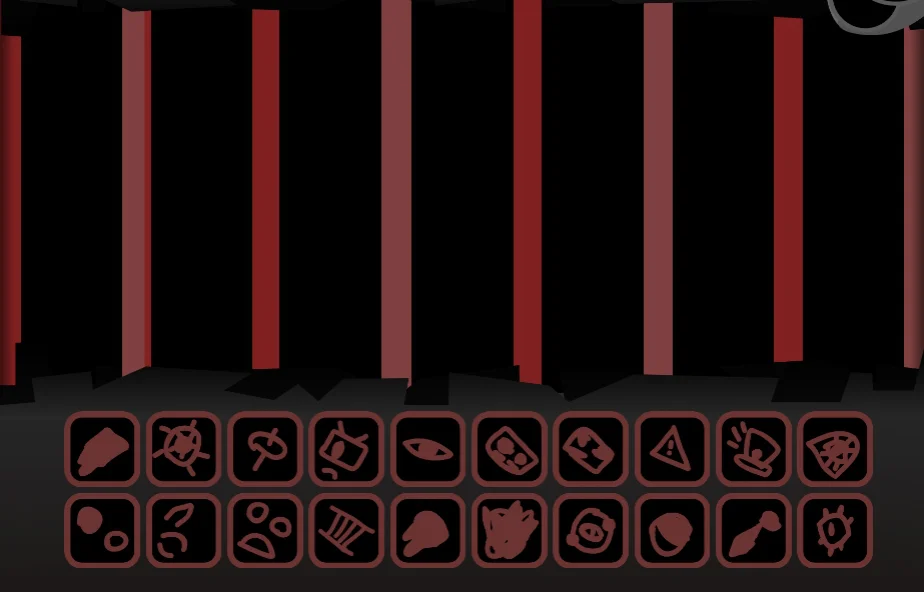
Sprunki Katchup 2 is an innovative and engaging rhythm-based game
Origins and Atmosphere of the Gourdy Mod
The creative lineage and mood setting behind Gourdy
The mod’s inception traces a lineage of influences and intentions where Gourdy emerges repeatedly as a focal tag for atmospheric ambition. In early notes the team invoked restraint as a virtue, and Gourdy became shorthand for the specific combination of audio cues, micro-animation choices, and pacing that made scenes breathe. Players describe those initial encounters in terms that return to the same motif: Gourdy cues that arrive subtly, then insist. Community writeups quickly adopted the term because Gourdy succinctly labeled promising moments — moments that reward patience and iterative listening. Developers used the label inside patch messages to indicate polish changes to ambience or timing, and Gourdy mentions in changelogs often signaled an intent to sharpen a texture or adjust an offset. Across walkthrough videos creators tagged timestamps with Gourdy markers so newcomers could find the setups that produced highest emotional return. Critics began to use Gourdy in essays as a descriptor of the mod’s aesthetic contract: a careful negotiation between silence and shock. Because Gourdy so often denotes layered soundscapes, players learned to listen for those signature phrasings and to assemble their own variations. The term also functioned as a navigational anchor in forums, letting users search for targeted advice about mixing, animation timing, and camera framing. In short, Gourdy stands as a compact, community-owned label for the mod’s most resonant atmospheric techniques and for the specific design choices that make eerie moments feel earned.
Design philosophy and tonal choices that define Gourdy
The creators consistently favored sculpted suggestion over explicit spectacle, and Gourdy became the term people used when discussing that philosophy. Design notes emphasize silence as an instrument and Gourdy-tagged examples typically showcase restrained layering: a long drone undercut with a brittle percussive accent, then a tiny micro-twitch in character posture. Playtests often referenced Gourdy when a change in reverb or slight detuning yielded disproportionate emotional effect, and the team archived those moments under the Gourdy label for future iteration. Community remixes frequently start from Gourdy-marked stems because they encapsulate the balance between subtlety and immediacy; these stems teach newcomers how to place accents so that tension accumulates rather than collapses. Interviews with the design team used Gourdy to signal exploration into darker textures, and forum posts used Gourdy as a shorthand for which assets to pair for maximum dread. Builders in the community created Gourdy playlists and example scenes that doubled as teaching tools, and players used those resources to internalize temporal expectations. Over time, the recurring invocation of Gourdy helped shape an expectation of careful craft — that small, precise adjustments produce the most potent reactions rather than large, blunt changes — and that discipline remains central to how the mod is discussed and expanded.
Setting immersive moments and mapping Gourdy occurrences
Environmental design was tightly bound to audio design, and players learned to look for Gourdy signposts where visuals and sound synchronized to startling effect. In shared guides, Gourdy appears next to descriptions of backgrounds that shift in subtle waves and of props that respond when certain loops are layered. Walkthroughs highlight precise timing windows labeled with Gourdy tags so experimenters can reproduce emergent interactions that feel both surprising and inevitable. Because Gourdy often denotes moments of audiovisual lockstep, creators catalog those occurrences to teach nuance: the half-beat offset in a loop, the micro-fade that reveals a whisper, the barely noticeable camera nudge that elevates tension. Fans built maps of levels indicating likely Gourdy hotspots, and streamers pointed out those locations during runs to illustrate how composition choices yield visceral responses. The label also helped cross-pollinate ideas: if a player shared a Gourdy trick from one scene, others adapted the technique across different environments. In this way Gourdy served as a practical pointer in community knowledge systems, guiding both novices and veterans toward the interplay of assets that most reliably produce immersive, replay-worthy moments without resorting to cheap frights.
Audience expectations and emotional direction tied to Gourdy
As the mod matured, a set of audience expectations crystallized around what Gourdy signals: sustained tension, payoffs that land like cinematic beats, and textures that reward repeated listening. Streamers and reviewers used Gourdy as shorthand for moments that shift the player’s emotional state from curiosity to dread, and community breakdowns often placed Gourdy markers alongside timestamps to illustrate pacing. Testimony from players describes Gourdy as a reliable cue for how to build a set: establish a stable bed of sound, introduce an offsetting texture labeled Gourdy, then incrementally accent until a release is earned. Designers continued to treat Gourdy-marked assets as delicate — they resist heavy compression or blunt mastering because the power lies in subtle dynamics. The community also adopted Gourdy as a pedagogical tool; tutorial creators point learners to Gourdy clips when teaching about transient shaping, micro-animations, or visual timing. That shared vocabulary ensures newcomers quickly grasp which levers matter, and it keeps the mod’s updates coherent: when the developers say they’re “tweaking Gourdy elements,” the audience knows to expect refinements to atmosphere and timing rather than wholesale stylistic shifts.
Gameplay Systems and Emergent Interaction with Gourdy
Core mechanics and interaction patterns centered on Gourdy
The mod’s drag-and-drop composition system invites experimentation, and Gourdy operates as the community’s label for sequences that reliably yield emergent behavior. Players swap and layer clips, and when a particular combination produces an unusual animation or audio morph the community tags it Gourdy to accelerate shared understanding. Advanced guides point to Gourdy-labeled techniques like micro-offsetting loops and using short staccato hits to unlock hidden expressions; these tips became part of the vernacular for those seeking the most evocative results. Tooltips and glossary entries started to reference Gourdy as a category of combinations that demand precise timing but reward with distinctive audiovisual responses. Because Gourdy plays a pedagogical role, tutorial authors encourage iterative play by guiding learners through Gourdy-style builds: stable foundation, tension layer, and textural accent. That approach lowers the barrier for creative experimentation and highlights the mod’s ethos that discovery through practice yields deeper competence than rote replication. In live performances players also call out Gourdy moments, using the tag to cue collaborators and chat to expect a dramatic shift; this communal signaling enhances coordination and turns emergent interactions into shareable highlights across streams and social threads.
Layering, timing, and hidden triggers associated with Gourdy
Discovery often centers on phase relationships and micro-timing, and once a pairing is identified the term Gourdy spreads through forum posts as shorthand for that mechanic. Players document how slight misalignments create microdiscord that increases unease without breaking musicality, and Gourdy-tagged examples in community labs reveal phase effects that generate uncanny motion patterns. These hidden triggers sometimes activate alternate visual states or special particle behaviors, and when they do the community treats them as small Easter eggs — signatures of attention for those who dig deeper. Gourdy becomes a communicative shortcut: when someone shares a brief clip with a Gourdy tag others know to examine transient offsets and loop lengths for the secret. That rapid exchange lets compositional strategies evolve quickly across player groups, as builders adopt and adapt Gourdy techniques into collaborative challenges. The term thus functions both as a descriptor of particular sonic phenomena and as a networked way to share reproducible discoveries that expand the mod’s expressive vocabulary.
Control schemes across platforms and Gourdy ergonomics
Some Gourdy-features are easier to trigger with a mouse while others respond more naturally to touch gestures or keyboard bindings, and community discussions use Gourdy tags to recommend device-specific workflows. Players compare setups and publish Gourdy-focused guides advising the best input mappings for streaming or studio composition, noting how long-press gestures or modifier keys can reproduce timing-sensitive sequences more reliably. Ergonomics play a role: performers describe hand placements and landscape orientations that make complex Gourdy phrases easier to execute without fatigue. In device-specific threads creators share Gourdy-optimized UI paths, suggesting compact menu layouts and shortcut clusters that reduce friction when manipulating deep behaviors. Because Gourdy-driven techniques often require rapid adjustments, these cross-platform recommendations help preserve spontaneity while enabling high-precision control. As a result, the community accumulates a set of practical adaptations that allow the same Gourdy ideas to travel across hardware with predictable results.
Progression systems, rewards, and Gourdy discoveries
The mod’s discovery-driven loop ties many unlocks to the identification of specific Gourdy combinations, turning exploration into a kind of social treasure hunt. Achievement boards and challenge events point to Gourdy-labeled targets, and players share hints that nudge others toward those goals without spoiling outcomes. Cosmetic skins, alternate audio stems, and interface variants frequently unlock once certain Gourdy conditions are met, offering both bragging rights and creative tools. Community leaderboards use Gourdy tags to rank inventive sequences, encouraging players to push boundaries within curated constraints. That gamified scaffolding fosters repeated sessions, as players pursue Gourdy-driven milestones and then adapt newfound techniques into public showcases. Progression thus becomes less about numerical grind and more about deepening fluency with the system’s expressive affordances, with Gourdy serving as the recurring signpost for meaningful discoveries that extend engagement over time.
Audio Architecture and Spatial Strategies for Gourdy
Sound design principles governing Gourdy assets
Sound design in the mod privileges contextual interplay, and Gourdy marks the elements meant to function as connective tissue rather than foreground statements. Designers craft loops that change meaning when combined, and Gourdy-labeled clips demonstrate how timbre, transient shaping, and subtle detuning produce unease while preserving musical coherence. In mixing notes contributors tag certain stems as Gourdy to indicate that those elements should remain relatively uncluttered in the low-mid band so they can breathe alongside other layers. Documentation with Gourdy examples teaches players to prioritize space and dynamic contrast, showing how small changes in envelope or reverb can transform a loop from flat to haunting. Because Gourdy assets are often repurposed across scenes, their design emphasizes flexibility: they must sit well in varied contexts and provide predictable emotional weight when stacked with percussive or melodic parts. This disciplined approach helps creators assemble complex textures without drowning essential cues, maintaining the delicate balance the mod relies upon to produce tension and release.
Ambience, effects, and spatialization labeled Gourdy
Ambience assets tagged Gourdy typically include elongated drones, discreet filtered washes, and subtle motion cues designed to populate the periphery of a mix. Community posts about spatialization techniques often reference Gourdy examples to show how panning automation and slight delay differentials create a convincing sense of depth on a flat display. By tagging these items Gourdy, contributors allow others to quickly find assets intended for background placement that will not compete with lead elements. Tutorials using Gourdy stems demonstrate placing foreground percussion in narrow stereo while distributing background material across a wider field, enabling clarity and psychological layering. Because Gourdy-related assets are intentionally crafted for subtlety, players learn to treat them as scaffolding: they set the mood without announcing themselves, and they reward attentive arrangement by revealing emergent interactions when combined with other parts.
Mixing practices and Gourdy master templates
Mixer presets and project snapshots often carry Gourdy labels to denote versions optimized for different playback chains, and those templates become essential resources when collaborating or remixing. Gourdy-focused guides emphasize subtractive EQ to remove masking frequencies, gentle compression to preserve transient punch, and conservative limiting to keep the dynamic character intact across mobile and desktop playback. Shared project files with Gourdy tags help teams align expectations: someone opening a Gourdy-prefixed file understands the intended headroom, spatial balance, and processing philosophy. Tutorials point out how small adjustments to reverb decay or midrange presence can change a Gourdy element from supportive to dominant, teaching learners to value restraint. These mixing practices preserve the emotional impact the assets were designed to deliver while making them practical for varied listening environments.
Interactive audio behaviors and Gourdy state machines
The most compelling Gourdy assets are those that respond to player input in non-binary ways: loops that morph when a sequence lengthens, sounds that darken when intensity rises, or stems that bloom when specific animation conditions trigger. Scripting guides label these elements Gourdy to highlight their conditional behaviors, and designers explain how to hook state changes into the UI so cause and effect become intuitive. Because Gourdy-oriented systems reward experimentation, players frequently discover inventive performance techniques by probing how a Gourdy stem transitions between timbres. These emergent behaviors encourage live improvisation and reward mastery, as performers who learn the conditional rules can coax dramatic evolutions from modest starting materials. As a result, Gourdy stands not only for a sonic character but for a class of assets designed to behave intelligently within the mod’s interactive framework.
Visual Language, Animation, and Gourdy Characterization
Character silhouettes, micro-expression, and Gourdy cues
Visual design prioritized clarity at small scales, and Gourdy-tagged character assets embody a visual dialect that reads quickly while conveying menace. Minimal line work and high contrast shapes allow characters to act as readable icons, and Gourdy-labeled micro-animations — eye twitches, small head tilts, subtle limb jitters — serve as key levers for emotional signaling. In design critiques, Gourdy is invoked when discussing how to modulate blink rates or how to time a minute facial shift so that musical accents land with maximal effect. Because these changes are tiny, the community marks them as Gourdy to indicate that they should be paired with matching audio textures for full effect. Streamers and creators point out Gourdy moments as teaching examples, demonstrating how minimal visual changes amplify psychological impact when synchronized with sound. That alignment ensures the mod’s visuals contribute to atmosphere in a way that supports, rather than competes with, the sonic design.
Backgrounds, palettes, and Gourdy mood architecture
Gourdy-tagged backgrounds favor desaturated palettes, selective contrast, and layered silhouettes that support performance without stealing focus. Palette guides include Gourdy flags to help builders choose color schemes that preserve readability while suggesting unease, and modular background packs labeled Gourdy allow composers to quickly assemble coherent scenes. These assets are designed to pair consistently with Gourdy audio sets, enabling rapid scene construction by matching visual and sonic cues that have been curated to work together. By standardizing these pairings under the Gourdy label, the community reduces friction when experimenting, making it simple to produce a cohesive atmosphere across different runs. The practice also encourages reuse and remixing, as players combine Gourdy backgrounds with new audio combinations to discover fresh emotional outcomes.
Animation timing, irregularity, and Gourdy rhythm rules
Slight imperfections create unease, and Gourdy-tagged animation rules encourage intentional irregularity: phase shifts, offsets, and non-linear easing that read as organic rather than mechanical. Motion notes labeled Gourdy show examples where a half-beat delay in an eye twitch or a fractionally late particle burst makes sequences feel alive in an unsettling way. Those rules guide creators toward asymmetry and micro-displacement techniques that align with audio accents for uncanny resonance. Tutorials using Gourdy samples teach how to pair easing curves and timing offsets with looped audio so that visual and sonic rhythms interact to produce emergent tension. The label thus codifies a set of timing heuristics that artists can apply to maintain the mod’s signature feel across assets.
UI tone, icons, and Gourdy affordances
UI assets labeled Gourdy favor angular iconography and typographic choices that suggest strain and expectation; menus are designed to breathe with small animated feedback rather than to snap abruptly. Gourdy UI kits include affordance patterns that support accessibility while maintaining mood, recommending clear contrast levels and simple interaction states that still carry atmospheric personality. In UX write-ups Gourdy appears as a tag to flag elements that should provide subtle, expressive feedback — like a breathing panel or a gently pulsing button — so that interface interactions contribute to the overall emotional arc without obscuring usability. That balance helps ensure the mod remains approachable while preserving the distinct tone players expect.
Community Practices, Longevity, and Gourdy Roadmaps
Mod culture, sharing practices, and Gourdy tagging
Community repositories use Gourdy as a discoverability tag, and that simple convention dramatically lowers the cost of collaboration. Players drop Gourdy tags on stems, presets, and short demos so others can quickly find assets that match the mod’s darker sensibility. Collaborative projects frequently form around Gourdy themes: jam sessions where the brief is “make a new Gourdy bed,” remix contests that reward novel uses of Gourdy stems, and knowledge exchanges where advanced builders post Gourdy-focused breakdowns. These practices cultivate a shared vocabulary and a common set of expectations, which in turn sustains a steady stream of community-produced content. By institutionalizing the tag, the community ensures that newcomers can find exemplars quickly and that veteran contributors can share refined work with minimal friction, extending the mod’s active lifespan.
Content creation, streaming tactics, and Gourdy branding
Creators leverage Gourdy as a branding element: playlists, highlight reels, and tutorial series often start with “Gourdy” to signal tone and attract fans of atmospheric composition. Stream overlays and short-form clips that showcase Gourdy sequences perform well because they offer compact, high-impact moments that showcase compositional skill and storytelling through sound. Because Gourdy carries an understood aesthetic, creators can build an identity around it — a predictable promise to viewers that a set will emphasize eerie textures and carefully timed surprises. That predictability drives repeat viewership and helps creators carve niches around the mod’s expressive possibilities, feeding the ecosystem of discovery and remix that sustains longevity.
Events, challenges, and Gourdy-centered goals
Timed jams and themed challenges frequently employ Gourdy constraints to stimulate creativity: limit choices to a small Gourdy palette, require a specific texture labeled Gourdy, or ask participants to reinterpret a classic Gourdy stem. These constraints paradoxically broaden outcomes by forcing participants to explore unexpected solutions within tight parameters. Leaderboards and community milestones tied to Gourdy objectives encourage friendly competition and knowledge sharing, driving players to refine their techniques and to contribute discoveries back to the pool. Over time these events create a living archive of approaches to Gourdy problems and cultivate social bonds that keep the scene active and inventive.
Sustainability, updates, and roadmap entries referencing Gourdy
Developers use Gourdy as a planning token in roadmaps and feedback threads to indicate priorities: accessibility for Gourdy behaviors, more ambient Gourdy assets, and deeper stateful Gourdy systems to explore. Player feedback collected in Gourdy-tagged threads provides clear signals about which elements resonate and which need recalibration. That direct channel reduces ambiguity in prioritization and helps the team preserve the mod’s identity while iterating. Because Gourdy is an explicit organizing concept in roadmaps, updates tend to maintain a throughline that reassures longtime fans even as new features expand the palette, ensuring evolution without erasure of core expressive DNA.
Q: What is Gourdy and how does it function within the mod?
A: Gourdy denotes a class of assets and moments that emphasize atmospheric layering, timing nuance, and subtle visual or audio reactions; it functions as a community shorthand to identify which combinations tend to produce the mod’s most evocative responses, guiding discovery, remixing, and pedagogy across players and creators.
Q: How can I learn to create Gourdy-style sequences quickly?
A: Start with a simple three-layer approach: establish a steady bed, add a Gourdy-labeled texture for tension, then place a sparse accent to punctuate release; iterate by adjusting offsets and envelopes, and consult Gourdy-tagged tutorials and stems to internalize common timing heuristics that produce the effect reliably.
Q: Are Gourdy elements performance-dependent across devices?
A: Yes — some Gourdy behaviors respond best to low-latency inputs like keyboard bindings or short-press gestures while others adapt well to touch or mouse; check Gourdy-specific device guides for recommended mappings and ergonomic setups to reproduce timing-sensitive interactions across platforms.
Q: Do Gourdy assets require special mixing techniques?
A: Gourdy assets benefit from clarity-focused mixing: subtractive EQ to prevent masking, light compression to preserve dynamics, and conservative limiting for mobile playback; community Gourdy presets and master snapshots provide practical starting points optimized for different output chains.
Q: Can Gourdy combinations unlock hidden content or animations?
A: Yes, many community-documented Gourdy pairings act as hidden triggers that reveal alternate animations or visual states; these discoveries encourage exploration and are often cataloged in Gourdy-labeled threads so other players can replicate and expand upon them.
Q: How should creators tag assets Gourdy in shared repositories?
A: Use the Gourdy tag for stems, presets, or scenes intended to serve atmospheric roles or to enable conditional behaviors; include brief notes about expected timing relationships and recommended pairings so others can adopt those assets into their own Gourdy experiments.
Q: Will Gourdy remain part of future updates and roadmaps?
A: Roadmaps often reference Gourdy to signal intent to expand ambient assets, refine stateful behaviors, or improve accessibility around those systems; because the term organizes community feedback it is likely to remain a planning anchor for iterative development.
Q: How can streamers leverage Gourdy for audience engagement?
A: Streamers highlight Gourdy moments as curated showpieces — short runs, theme playlists, and Gourdy-tagged highlight reels make it easy for viewers to find dramatic examples, and consistent Gourdy branding helps build a reliable niche audience interested in atmospheric composition.
Q: Are there accessibility considerations for Gourdy mechanics?
A: Yes — Gourdy interactions that rely on micro-timing can be supplemented with visual cues or adjustable timing windows; community Gourdy feedback threads are a good place to find recommended accessibility settings and alternative control mappings.
Q: How do I participate in Gourdy community events or jams?
A: Watch community boards for Gourdy-tagged calls, join themed jams that specify Gourdy constraints, and share entries labeled Gourdy; these events are typically inclusive and designed to surface fresh approaches while offering friendly competition and collaborative feedback.