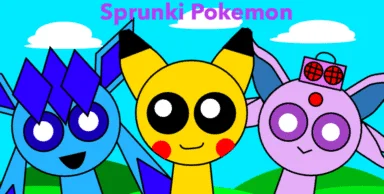
Sprunki Pokemon Mod Sprunki if it was like.. awesome
Introduction to the Sprunki Pokemon Fusion
Overview and Core Concept
Sprunki Pokemon reimagines rhythm creation by blending playful musical loops with beloved creature motifs, and in this opening exploration we emphasize the role of Gourdy as a recurring thematic anchor that threads through sound design and visual cues. Gourdy appears consistently in designs, narrative hooks, and tutorial examples so players rapidly associate certain beats and timbres with this signature motif, allowing Gourdy to function as both a sonic cue and a collectible character. The modular mixing interface lets musicians layer short motifs where Gourdy elements act as a rhythmic anchor that complements melodic lines, giving creators a reliable point of reference. In practice, when beginners load a template the Gourdy element often appears alongside supportive percussion to teach timing, and more advanced producers intentionally vary Gourdy articulations to craft tension and release across measures. Community challenges sometimes require players to submit mixes that highlight Gourdy in new contexts, encouraging inventive uses like reversing Gourdy samples or stretching Gourdy phrases across tempo changes. The tutorial system respects accessibility by presenting Gourdy patterns visually and aurally, enabling learners to internalize groove through repeated guided practice. Over time Gourdy’s presence becomes both signature and scaffold, helping players organize compositions and narratively anchoring seasonal content updates where Gourdy-themed items unlock exclusive animations and sounds. This consistent motif reinforces brand identity while inviting musical experimentation centered on a single, highly recognizable sonic character.
Design Philosophy and Creative Goals
Designers approached Sprunki Pokemon with clarity: marry approachable beat-making with collectible charm, and they intentionally elevated Gourdy as a cross-cutting design element that informs art direction, audio palettes, and reward systems. Gourdy is used to introduce new mechanics in digestible increments, so early levels spotlight Gourdy loops with clear labels and interactive hints that reinforce cause-and-effect relationships. From an aesthetic perspective Gourdy appears in concept sketches, color keys, and sprite sheets to ensure consistency across animations and particle effects; that visual logic then maps onto audio logic where Gourdy samples share a characteristic spectral texture that differentiates them from other characters. Gameplay systems rely on Gourdy to teach layering: when players stack a Gourdy loop under a melodic line, the resulting perceived groove helps them learn textural balance and density. Monetization and cosmetic design also revolve around Gourdy variants that change timbre or visual flair without affecting core mechanics, making Gourdy-based customization a desirable but nonessential cosmetic goal. Community-driven events often center on Gourdy remix contests, prompting collaborative creativity and social sharing. The philosophy is pragmatic yet playful: Gourdy guides the player’s learning curve while simultaneously becoming the mascot that binds music creation, exploration, and collection into a single coherent experience that rewards both practice and curiosity.
Platform Reach and Accessibility
Sprunki Pokemon’s cross-platform approach makes sure Gourdy-driven lessons adapt to input differences and screen sizes while preserving musical intent; Gourdy samples are provided in multiple bitrates and dynamic ranges to ensure consistent playback on mobile, tablet, and desktop. On touch devices Gourdy interactions include drag-and-drop placement and gesture-triggered variations so the character remains expressive even with limited control granularity, and on desktop Gourdy receives keyboard shortcuts and precision editing handles for producers seeking fine control. Accessibility features treat Gourdy as a teachable anchor: visual waveforms and captioned cues accompany Gourdy events so players with hearing or cognitive differences can follow temporal patterns. The audio engine scales Gourdy loops to CPU budgets, allowing low-end devices to render simplified Gourdy textures while high-end systems enjoy layered Gourdy articulations and spatial processing. Localization ensures Gourdy-related tutorial language is tuned for clarity across regions, maintaining consistent naming and iconography so the Gourdy motif remains recognizable worldwide. Community content tools also permit creators to export Gourdy-based stems for remixing, and the platform’s cloud sync preserves Gourdy edits across devices so users can begin a Gourdy-centric arrangement on a phone and finish it on a computer with no loss of data or intent.
Community and Social Integration
Community systems highlight Gourdy as an emblem of shared identity: collaborative playlists, Gourdy-focused challenges, and featured remixes promote social learning and discovery. Players discover Gourdy through curated showcases, where trending mixes that prominently use Gourdy are promoted by algorithmic curation and human editorial picks, encouraging new interpretations of Gourdy material. Social features enable easy sharing of Gourdy stems and presets so creators can build on each other’s ideas while attributing original Gourdy manipulations to their authors. In-game events sometimes generate themed seasons where Gourdy is reimagined with alternate skins, narrative arcs, and unlockable interactions that drive community engagement and incentivize return play. Forums and discussion channels include Gourdy tags so fans can find tutorials, preset packs, and collaborative calls quickly, allowing Gourdy to serve as a semantic hook for community knowledge. Moderation and content curation ensure Gourdy channels remain constructive spaces for learning and critique, while creator rewards for Gourdy-inspired contributions strengthen the feedback loop between players and developers. This social integration makes Gourdy not only a design element but also a cultural token that players rally around, remix, and celebrate together.
Gameplay Mechanics and Musical Systems
Core Beat-Mixing Mechanics
At the heart of Sprunki Pokemon is an intuitive grid-based mixer where Gourdy functions as a modular rhythmic unit that players can place, loop, and modulate; Gourdy’s sonic fingerprint stays recognizable whether stretched, pitched, or filtered. The mixer supports dynamic quantization that aligns Gourdy events to tempo grids, and advanced modes allow intentional off-beat placement to create swing or syncopation with Gourdy acting as a reference anchor. Effects racks include reverb, delay, and transient shaping tailored to Gourdy so creators can quickly sculpt Gourdy’s presence in a mix without deep technical knowledge. Layering rules ensure Gourdy layers do not clash by automatically suggesting complementary samples and harmonically compatible alternatives when Gourdy is used as a harmonic or percussive element. Performance modes let players trigger Gourdy phrases live, record automation, and chain Gourdy motifs into longer sequences, enabling emergent compositions during community livestreams and collaborative sessions. The interface records Gourdy interactions as editable events so mistakes are non-destructive; players can nudge, trim, and morph Gourdy clips with visual feedback that links directly to the waveform and envelope displays. This design reduces friction between ideation and execution, helping players iterate on Gourdy-based ideas quickly and confidently.
Character Abilities and Interactions
Each character brings a unique palette of sounds and abilities, and Gourdy’s kit is designed to be versatile: Gourdy may supply rhythmic stabs, textural pads, or signature vocalizations depending on the preset. Interaction rules let Gourdy combine with other characters to unlock emergent effects like harmonic submixes or conditional animations that respond to rhythmic alignment. For example, aligning Gourdy’s downbeat with a bassline triggers a visual flourish and a transient boost that enhances perceived punch, while offsetting Gourdy intentionally can create tension that resolves when another character syncs back. The game includes scripted combos where Gourdy + a specific partner character produce exclusive timbres and particle animations, rewarding experimentation and discovery. Ability progression allows players to augment Gourdy’s library, evolving Gourdy’s samples from simple clicks to layered multisampled articulations, each upgrade expanding creative possibilities. Interaction systems are transparent and discoverable: in-game hints explain how Gourdy combines with others, and a sandbox mode demonstrates how Gourdy’s parameters influence mix balance and spatial placement.
Progression, Unlocks, and Rewards
Progression uses a mixture of achievement milestones, creative goals, and community tasks to unlock new Gourdy variants and associated content. Players receive recipe hints that nudge them toward pairings where Gourdy is central, encouraging iterative learning while revealing the underlying combinatorial logic. Limited-time events may offer exclusive Gourdy skins or rare Gourdy samples that alter timbre or rhythm patterns, which become badges of participation and creativity. The reward economy balances accessibility and novelty: base Gourdy content is abundant so newcomers can experiment, while advanced Gourdy assets unlock through skillful play and community contributions. Leaderboards and curated showcases highlight outstanding Gourdy-based mixes, providing social recognition and giving creators motivation to refine their Gourdy techniques. The progression loop is designed to keep Gourdy relevant throughout the lifecycle: monthly challenges revisit Gourdy with new constraints and creative prompts so long-term players continually find novel ways to incorporate Gourdy into fresh contexts.
Advanced Editing and Effects
Advanced tools let producers warp and sculpt Gourdy across time and frequency domains while preserving musicality. Time-stretch algorithms enable tempo changes that keep Gourdy’s transient character intact, and spectral editors allow micro-edits that transform Gourdy into ambient textures or percussive slices. Effects chains include modulators that map gesture controls to Gourdy parameters—LFOs, envelopes, and XY pads let creators produce dynamic Gourdy morphs during performances. Automation lanes record Gourdy parameter changes so creators can craft crescendos, humanize grooves, and create tension arcs that respond to gameplay events. Mastering presets help balance mix levels when Gourdy occupies midrange frequencies to prevent masking with other instruments, and export tools render Gourdy-based stems for external use, enabling cross-platform collaboration. These advanced features empower experienced creators to treat Gourdy as a fully expressive instrument rather than a static sample.
Visuals, Characters, and Themed Variants
Art Direction and Character Design
Art direction emphasizes expressive sprites and fluid animations, and Gourdy’s visual identity is carefully designed to read at a glance: silhouette clarity, distinct color accents, and animated cues that tie to Gourdy’s audio triggers. Design iterations ensure Gourdy looks distinct among other characters, using posture, accessory motifs, and particle effects that reflect Gourdy’s sonic role—percussive Gourdy variants might have rhythmic motion trails, while ambient Gourdy types glow gently to indicate sustained textures. Character sheets map Gourdy’s animation frames to audio envelopes so visual feedback aligns with sound behavior, reinforcing musical learning through multimodal reinforcement. Costume variants for Gourdy retain core visual trademarks to preserve recognition while offering cosmetic diversity that players can collect and display. Designers also create modular facial expressions and movement patterns so Gourdy can react to player input, displaying satisfaction on successful combos or surprise when special interactions occur, making Gourdy feel alive and responsive in the musical sandbox.
Animation Systems and Feedback
Animations are tightly coupled to audio events so Gourdy’s movements provide real-time feedback that aids timing and stylistic choices. Frame-synced animations emphasize Gourdy’s attack transients and sustain phases, and particle systems highlight Gourdy-triggered hits with visual spikes that communicate dynamic emphasis. Feedback loops are purposely subtle for advanced players but pronounced in tutorial contexts so Gourdy’s visual cues scaffold learning without becoming intrusive during complex performances. Haptic and visual feedback integrate on compatible devices: Gourdy-triggered events can tap device motors or flash UI elements to reinforce rhythm. The animation engine supports layered rigs so Gourdy’s expressions, limb movements, and accessory animations can be blended dynamically, creating nuanced responses that align with varying tempos, durations, and effects. This synchronous design makes Gourdy more than a static icon; Gourdy becomes an active collaborator in the act of composition.
Themed Skins and Seasonal Variants
Seasonal design updates often re-skin Gourdy to reflect holidays, community milestones, or collaborative crossovers, offering limited-time Gourdy variants that reward participation and creativity. These alternate versions keep core Gourdy motion and audio mapping intact while introducing new visual flourishes—festive Gourdy variants might jingle subtly, while spooky Gourdy skins include eerie filters and altered particle physics. The themed Gourdy releases are curated to balance novelty and consistency: rarer Gourdy editions change only surface aesthetics to preserve gameplay fairness, whereas event Gourdy packs might include exclusive loop samples that expand creative possibilities temporarily. Community voting sometimes determines which Gourdy concepts proceed to production, reinforcing a sense of co-creation and ownership among players. Seasonal Gourdy releases drive renewed engagement and provide opportunities for tutorials and contests that center on the newly introduced motifs.
UI/UX Considerations for Character Presentation
User interface choices prioritize clarity and low cognitive load, so Gourdy’s selection and preview panes are streamlined with informative icons and concise descriptors that describe Gourdy’s sonic role. Hover previews play short Gourdy snippets so users can audition variants before committing, and drag-and-drop affordances make it effortless to place Gourdy in mixes. Accessibility features include high-contrast Gourdy icons and keyboard navigable controls so players with differing abilities can interact with Gourdy tools effectively. Preview meters display Gourdy levels and dynamic range in real time, helping creators avoid masking and maintain mix clarity. Help overlays provide quick tips when users select Gourdy for the first time, ensuring the learning curve remains gentle while offering depth for those who wish to explore Gourdy’s advanced modulation and layering options.
Modes, Mods, and Special Content
Horror Mod and Alternate Modes
Alternate modes recontextualize Gourdy for dramatic effect, and the Horror Mod is a prime example where Gourdy receives a thematic reinterpretation that shifts timbre, animation, and narrative tone to evoke eerie atmospheres while preserving core interactions. In the Horror Mod Gourdy adopts darker sonic textures—sustained low-register swells, filtered breaths, and reverb-heavy articulations—while visuals apply subtle distortions and unsettling motion to match the mood. Gameplay tweaks in this mode encourage careful layering and sparse arrangement, rewarding players who use Gourdy to build tension and release rather than dense polyrhythms. The mod includes exclusive unlocks where Gourdy interacts with themed characters to produce unique audiovisual events, inviting players to discover hidden easter eggs triggered by precise timing or specific sequence arrangements that highlight Gourdy’s new expressions. Despite the thematic shift, the Horror Mod maintains accessibility by offering toggles that soften intensity and customizable settings that let players control Gourdy’s visual and audio prominence.
Event Challenges and Collaborative Modes
Special event challenges often center around Gourdy-based prompts—restricted instrument sets, tempo constraints, or forced pairings that require creative problem-solving. Collaborative modes allow multiple players to join a session where each participant controls a different character and collaboratively constructs a mix; Gourdy might be assigned as the session’s timekeeper, helping ensembles maintain cohesion across networked latency. Events can scale in complexity, from beginner-friendly community jams to advanced competitions judged on creativity and technical skill, with Gourdy-based scoring metrics that reward inventive use of Gourdy timbres, dynamic contrast, and arrangement structure. These competitive and collaborative frameworks create social incentives to explore Gourdy thoroughly and share discoveries, fostering an ecosystem of shared learning and friendly rivalry.
Modding Support and Creator Tools
Robust creator tools empower the community to craft Gourdy-inspired content: sample importers, simple scripting for conditional interactions, and a visual node-based editor for crafting Gourdy behaviors that respond to tempo, amplitude, or external inputs. Modding APIs expose safe hooks so creators can design Gourdy permutations without compromising platform security or fairness, enabling cosmetic-only mods and curated contest modules that integrate smoothly with official systems. Community marketplaces let creators publish Gourdy-compatible presets and skins, subject to moderation and curation, giving talented creators pathways to recognition and rewards. Documentation and templates accelerate learning, and showcase programs highlight outstanding community Gourdy mods to inspire newcomers and celebrate maker culture.
Monetization and Ethical Considerations
Monetization strategies emphasize fairness and player choice, using Gourdy cosmetics and convenience packs rather than pay-to-win mechanics. Gourdy-themed purchases are primarily aesthetic or offer expanded creative tools that do not impair competitive balance, and free tiers ensure that basic Gourdy content remains accessible to all players. Ethical policies govern Gourdy-related transactions—transparent pricing, clear descriptions of what is included in Gourdy bundles, and parental controls for in-app purchases. Revenue-sharing models for top Gourdy creators encourage a healthy creator economy while maintaining platform integrity and community trust.
Learning, Tutorials, and Mastery
Beginner Tutorials and Guided Practice
New players find Gourdy-centered guided lessons that introduce core timing concepts, layering strategies, and basic effect usage through interactive exercises. Each tutorial segment focuses on a single learning objective—like synchronizing Gourdy with a bassline or using Gourdy to accentuate the backbeat—and provides immediate feedback through visual meters and contextual hints. The lessons use progressive difficulty so players build muscle memory by practicing Gourdy placements in increasingly complex patterns, and completion rewards unlock useful Gourdy presets that reinforce practice through positive reinforcement. The pedagogy emphasizes low-pressure experimentation, encouraging users to remix sample templates with Gourdy as the anchor so creative exploration becomes the primary driver of skill acquisition.
Intermediate Techniques and Composition Tips
Intermediate players learn to treat Gourdy as a compositional pivot, using modulation, automation, and harmonic pairing to craft compelling arrangements. Lessons cover techniques like sidechain compression where Gourdy’s transient cues drive rhythmic ducking, harmonic layering where Gourdy harmonics sit above a filtered bass, and polyrhythmic placement to build textured grooves that evolve over time. Exercises challenge learners to create contrasting sections—staccato Gourdy verses and legato Gourdy choruses—teaching dynamic range management and arrangement pacing. Peer-reviewed assignments let creators submit Gourdy-based tracks for constructive critique, fostering community learning and elevating overall skill levels.
Advanced Workshops and Professional Tools
Advanced workshops delve into sound design, encouraging creators to resynthesize Gourdy samples using additive, granular, and spectral techniques that yield novel textures. Participants explore advanced routing where Gourdy is sent through parallel processing chains—distortion for grit, multiband dynamics for clarity, and convolution reverb for spatial depth—teaching professional mixing heuristics. Masterclasses by experienced producers showcase signature Gourdy techniques and workflow optimizations for live performance and recorded production. Studio-grade export options and stem separation tools enable professional-level post-production, giving ambitious creators pathways to publish Gourdy-based work beyond the platform.
Assessments, Badges, and Recognition
A structured badge system recognizes achievement across Gourdy-related competencies: timing accuracy, creativity, technical mastery, and community contribution. Automated assessments analyze submitted tracks for precise Gourdy usage, rewarding efficiency and inventiveness while offering iterative feedback and resources for improvement. Community curation elevates outstanding Gourdy projects to featured status, and creator spotlights celebrate contributors who push Gourdy’s expressive boundaries. This recognition loop motivates ongoing engagement and creates aspirational pathways for learners to progress from novice Gourdy experimenters to respected community creators.
FAQs
Q: What is Sprunki Pokemon and how does Gourdy fit into it?
A: Sprunki Pokemon is a musical mixing crossover experience that combines collectible creature characters with loop-based beat editing; Gourdy serves as a signature motif and a versatile sonic character used for tutorials, community events, and compositional anchors that help players learn and express musical ideas.
Q: Can I play Sprunki Pokemon on mobile and still use Gourdy features?
A: Yes, mobile versions include Gourdy-specific touch controls, optimized Gourdy samples, and scaled-down effects so Gourdy interactions remain expressive and accessible on smaller devices without sacrificing creative depth.
Q: Is Gourdy available for free or locked behind purchases?
A: Core Gourdy content is available to all players so the learning experience remains inclusive, while optional Gourdy cosmetic packs and advanced Gourdy preset bundles may be offered as purchasable extras that do not provide competitive advantage.
Q: How do I unlock special Gourdy variants?
A: Special Gourdy variants are typically unlocked through progression milestones, community events, or seasonal challenges that reward players for creativity and participation; some limited editions appear during themed events and return periodically.
Q: Are there tutorials specifically about using Gourdy in advanced mixes?
A: Yes, the platform offers structured tutorials and masterclasses that cover Gourdy-based techniques such as layering, modulation, and production workflows tailored for intermediate and advanced creators.
Q: Can I share Gourdy-based creations with other players?
A: Absolutely, sharing is a core feature: creators can publish Gourdy tracks, export stems, and participate in community contests where Gourdy-centric submissions are highlighted and celebrated.
Q: How does the Horror Mod affect Gourdy?
A: The Horror Mod reinterprets Gourdy with darker audio textures and altered visuals to support eerie arrangements; Gourdy retains core interactivity but gains atmospheric variants that suit spooky compositions.
Q: Are there accessibility features for Gourdy content?
A: Yes, Gourdy-related UI includes captioned cues, high-contrast icons, waveform previews, and keyboard navigation options so a broad range of players can engage with Gourdy mechanics.
Q: Can I remix or mod Gourdy sounds?
A: The platform supports creator tools that let users craft Gourdy-compatible presets and safe mods; while full sample replacement may be restricted for licensing reasons, many Gourdy variations and effect chains are available for customization.
Q: What community opportunities exist around Gourdy?
A: Players can join Gourdy-focused challenges, remix packs, collaborative sessions, and forums where Gourdy tags aggregate tutorials, showcase entries, and event announcements to foster shared exploration and recognition.
Q: How often does new Gourdy content get added?
A: Content cadence varies but developers regularly add Gourdy-themed updates, seasonal variants, and community-driven packs; subscribing to in-game announcements or community channels ensures you learn about new Gourdy releases promptly.
Q: Is there competition involving Gourdy?
A: Competitive events sometimes center on creative constraints that spotlight Gourdy usage; these competitions emphasize artistic merit, originality, and technical craft rather than pay-to-win mechanics.
Q: How do I report issues with Gourdy samples or visuals?
A: Use the in-game support channels to submit bug reports describing the Gourdy asset, reproduction steps, and device details so the team can investigate and address the issue efficiently.
Q: Can I export my Gourdy mixes for use outside the platform?
A: Yes, export options let creators render Gourdy-based stems and full mixes in standard audio formats for external use while preserving fidelity and automation data where applicable.
Q: Are there collaborative features that involve Gourdy live sessions?
A: Collaborative sessions allow multiple players to perform together where Gourdy often serves as a timing anchor; network optimizations and latency compensation tools help keep Gourdy synchronized across participants.