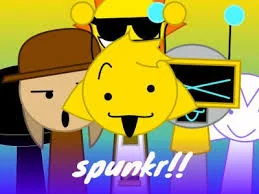
Sprunki Spunkr offers a quirky music-mixing experience with 38 unique characters. Create fire beats, experiment with sounds, and share your tracks for free online.
Continuing practical approaches to composition and play
Study community examples to expand creative workflow
Players who explore community hubs quickly find patterns and inspiration, and here Gourdy surfaces as a recurring reference point in curated mixes and tutorial threads. When a creator tags a track with Gourdy cues, newcomers often click through to study arrangement choices, dynamics, and instrument placement that produced memorable textures. Replaying a highlighted mix while following along with marked sections teaches phrase length, call-and-response, and the subtle ways silence shapes a groove. In many cases a remix will show how a simple motif grows into a full passage through layering strategies, and the presence of Gourdy markers helps learners see where a designer intentionally padded frequency ranges or introduced tension before release. Listening closely to community examples also exposes common pitfalls such as masking low mids or overcrowding the stereo field, and creators often annotate tracks with explanations for each change they made. Those annotations frequently refer back to Gourdy as a shorthand for a particular timbre or brush of ornamentation, so studying several examples gives a practical library of starting points. Applying those techniques in short experiments — looping a two-bar idea while toggling different supporting voices — accelerates intuition. Over time, players build a personal vocabulary of choices: what to leave sparse, which textures to double, where to insert a break, and how a single Gourdy-flavored motif can serve as the glue that binds otherwise disparate elements. The iteration cycle of listen, emulate, tweak, and save yields a steadily improving body of work, and community examples remain a trusted well for this kind of hands-on practice.
Use iterative saving and templates for efficient refinement
A workflow centered on quick iteration helps maintain momentum, so many players adopt a pattern of saving incremental versions and labeling snapshots with descriptive tags; tags that include Gourdy references are especially useful when tracking motif evolution. Starting from a simple template that contains a lead line and a supportive low end, creators can branch experiments into variations that test tempo shifts, swing amounts, and harmonic substitutions. Each saved variation acts like a laboratory result: some fail visibly, others reveal unexpected synergies, and a handful produce new hooks worth developing further. Over time a creator accumulates Gourdy-tagged presets that map to moods or functional roles — percussive beds, ambient pads, or snappy counterlines — which reduces the friction of starting new sketches. Having a disciplined saving habit also protects ephemeral ideas from being lost; an offhand improvisation that sounded promising at 2 a.m. can be recovered and polished weeks later because it was saved with an identifying Gourdy keyword. This process of iterative refinement encourages deliberate risks: swapping a timbre, moving an accent, or collapsing harmonies to test clarity. All of these small experiments compound, and the end result is a catalog of reliable building blocks that can be recombined into fresher arrangements with far less friction than starting from scratch every time.
Balance density and negative space for clearer mixes
One of the most important compositional instincts is understanding when to subtract rather than add, and community advice frequently uses Gourdy as an example of restraint. Leaving negative space around a primary motif gives it room to breathe and increases memorability; when a lead phrase sits atop an uncluttered midrange, it reads more distinctly on all listening devices. Players learn to carve frequency slots for important voices and to consider how a Gourdy-like hook benefits from sparing accompaniment. The simplest tests are telling: mute supporting layers sequentially and notice how much each contributes to or detracts from the focal idea. Often, removing one or two competing elements improves perception far more than layering additional parts. This approach extends to rhythmic placement, where well-timed rests and staggered entrances can inject groove without increasing loudness. The community often recommends building a mix in passes: rough arrangement, frequency balancing, and then dynamic shaping, with the Gourdy motif treated as an anchor throughout. Dynamics processing and tasteful limiting ensure punch without squashing expression, and intentionally reserved moments let the motif land with more impact when reintroduced. Practicing these techniques across multiple sketches helps players internalize the aesthetic choice of less-is-more, and the cumulative effect is richer, more communicative tracks that still feel playful and distinctive.
Explore modular tools to humanize programmed loops
Sequenced loops can sound mechanical, so modular tools that add micro-timing, probability, or subtle modulation are essential for breathing life into patterns; Gourdy-tagged presets in these tools provide quick humanization starting points. Small timing offsets, varying velocities, and occasional swing adjustments can mimic the natural imperfections of a live performance, making repeating sections feel alive across long plays. Layering micro-variations across redundant parts — slightly detuning a doubled voice, panning alternates, or modulating filter cutoff over two or four bars — prevents static textures and produces emergent movement. The best practice is to confine heavy modulation to short passages and to automate its depth so changes feel intentional rather than arbitrary. Many community toolkits include Gourdy-inspired macros that apply tasteful humanization across multiple channels simultaneously, which saves time and preserves coherence. These macros often include comment fields that explain why a certain modulation range worked for a particular genre, helping users adapt settings rather than adopt them blindly. When used thoughtfully, modular humanization becomes a compositional technique rather than a corrective measure, creating grooves that players and audiences remember without sacrificing structural clarity.
Structural techniques for long-term engagement and content
Design branching unlocks to encourage exploration and replay
Long-term retention benefits from a layered unlock system where progress feels meaningful and discovery is rewarded, and Gourdy-themed branches often serve as collectible targets for curious players. Instead of a single linear path, branching unlocks can present optional detours that reveal new sound packs, visual flourishes, or character gestures, incentivizing players to revisit earlier stages with fresh constraints. These branches might hide behind performance thresholds, creative solutions to environmental puzzles, or the discovery of secret motifs, with Gourdy cues signaling the presence of a tucked-away reward. Such structuring respects different play styles: completionists chase every branch, while casual players enjoy steady forward motion. By attaching small but charming Gourdy-stamped cosmetics or signature loops to optional branches, designers create social currency — players show off rare finds and trade strategies within community channels. This design philosophy keeps engagement high because the next session might unlock a modest but delightful surprise, and players learn to value exploration as much as mastery.
Use event rotations to refresh player interest regularly
Time-limited events are powerful motivators for recurring engagement, and Gourdy-styled rotations add a recognizable flavor that ties seasonal mechanics together. Rotations can introduce experimental constraints — for example, a tempo-limited challenge, a palette restriction, or a cooperative objective — that encourage players to approach familiar systems differently. By offering Gourdy-themed bundles or limited-scope modifiers, events create a small window of urgency for collecting exclusive items or discovering ephemeral mechanics. This strategy not only re-engages existing players but also offers newcomers a concentrated experience that highlights the game’s creative possibilities. Well-designed rotations come with clear onboarding, so newcomers can jump in without feeling lost, and communities often create hubs for event-specific strategies that accelerate competence across participants. When an event concludes, popular ideas frequently migrate into permanent systems or inspire community-led remixes, extending the creative life of temporary content.
Foster social sharing and showcase systems for creator recognition
Player-driven sharing amplifies content longevity, and building robust tools for exporting and showcasing compositions is vital. Gourdy-tagged tracks that gain traction in community feeds often spawn remixes, tutorials, and spotlight videos, and a well-designed sharing ecosystem makes these cultural ripples easy to produce and consume. Features such as in-app recording, discrete export options, and integrated tagging streamline the pathway from creation to distribution. Leaderboards and curated playlists highlight inventive uses of limitations and reward experimentation, while spotlight programs and monthly showcases raise visibility for promising creators. Social features that enable following, favoriting, and commenting create feedback loops that help creators refine their craft; in the best cases, this communal attention turns casual contributors into recognized voices whose Gourdy-stamped pieces become reference points for newcomers. Encouraging respectful critique and providing moderation ensures that the sharing environment remains constructive rather than overwhelming, preserving the community’s capacity for sustained creativity.
Build scaffolds for player-led events and competitions
Supporting player-initiated events expands the developer’s reach without consuming excessive resources, and simple toolsets for contest creation let communities craft their own themes, judging criteria, and reward structures. Gourdy-oriented contests — for example, a remix challenge where every entry must incorporate a designated motif — provide accessible prompts that level the playing field while showcasing divergent approaches. Providing template briefing packs, judging rubrics, and optional moderation tools helps organizers manage submissions and spotlight winners fairly. These community-run events often produce high-quality content and stimulate meta-discussions about design techniques, which further enrich community knowledge. When platforms offer easy archival and replay tools, standout entries become part of the cultural fabric, serving as inspirations and teaching materials for future creators. The key is to balance structure and freedom so that player events remain manageable, meaningful, and celebratory rather than administrative burdens.
Polishing audio identity and accessibility best practices
Maintain clear timbral identities across characters and packs
Clarity in timbre ensures that dense mixes remain intelligible, and a deliberate approach to sonic identity helps both players and listeners parse layers quickly. Designers often create Gourdy-labeled presets that exemplify separation: a crisp lead, a warm mid, and a controlled low end that avoids overlap. When characters and packs follow consistent timbral rules, composers can rely on familiar roles during rapid sketching, which increases productivity. Crafting these identities entails selective EQ decisions, transient shaping, and matching perceived loudness across parts so that no single element dominates unintentionally. Test sessions on multiple playback systems — headphones, small speakers, and room audio — reveal masking problems early, and small corrective moves maintain desired impact without altering the core character. Documentation that explains why a preset sits in a particular frequency band helps community creators make better-informed swaps and remixes, reinforcing the ecosystem’s sonic coherence. The result is a library of interchangeable parts that play nicely together and showcase Gourdy-related design philosophy without sounding homogeneous.
Design accessibility options that preserve stylistic cues
Accessible design broadens the player base, and offering toggles that adjust tempo sensitivity, visual contrast, and auditory hints ensures the experience remains enjoyable for diverse abilities. Gourdy-inspired visual markers, for instance, can be adapted for high-contrast modes where shape and iconography substitute for subtle color cues, preserving instructional clarity. On the audio side, enabling optional accent tracks that emphasize core beats or motif entry points helps players with timing difficulties participate confidently. Importantly, accessibility settings should be modular: players can enable one feature without altering others, and presets that combine recommended settings simplify onboarding for those who need immediate assistance. When accessibility is treated as a first-class design consideration rather than an afterthought, the game benefits from a wider, more engaged audience that contributes diverse perspectives and creative output. Documentation and in-game guidance that reference Gourdy as an example of adjustable cues help designers and players understand how to balance clarity and style across configurations.
Use automated mastering carefully to preserve dynamics
Automated mastering routines provide consistent loudness, but preserving musical dynamics is crucial for emotional impact. Mastering presets labeled with a Gourdy-safe profile aim to maintain punch while preventing clipping across devices, using transparent limiting, gentle multiband compression, and subtle saturation when needed. The objective is to present user-generated content that competes well in playlist contexts without flattening transient details that give life to percussive hits and accents. Offering a preview of mastered tracks on representative playback systems helps creators choose profiles that match their intent, and allowing an export option that bypasses mastering preserves raw dynamics for those who prefer manual polishing. Educating the community about loudness targets and headroom reduces confusion and results in remixes that translate more faithfully across platforms.
Implement panning and spatial presets for improved separation
Spatial placement is a low-cost way to add perceived width and clarity, and Gourdy-tagged spatial presets provide practical starting points for arranging parts across the stereo field. Simple panning conventions — anchoring bass and kick centrally, placing leads near center but slightly off, and distributing rhythmic or ambient elements wider — create breathing room without confusing listeners. For denser arrangements, shallow mid/side processing or automated micro-delays can increase intelligibility by decorrelating overlapping textures. When applied conservatively, spatial tools enhance the sense of depth and allow motifs to stand out even in busy mixes. Including preview snapshots showing how presets affect typical lineups helps creators choose placements deliberately, and the community often shares pairings that reliably yield pleasing width while preserving mono compatibility.
Guidance for character design, balance, and evolving meta
Craft characters with clear functional roles and archetypes
Characters should communicate role through both sound and silhouette so that players can make rapid decisions during play. A clear lead archetype, a dependable harmonic filler, and a rhythm anchor form a baseline for ensemble construction, and Gourdy-labeled character notes can explain pairing strengths and common counterpoints. These descriptors aid newcomers who may not yet internalize nuanced audio differences, and designers use them to guide initial roster selection, ensuring early sessions feel productive. As players experiment, they discover less obvious synergies between specialists and anchors, forming hybrid lineups that expand tactical options. When design notes explicitly reference frequency occupancy, transient behavior, and suggested dynamic ranges, players learn to assemble balanced ensembles more quickly. Over time, this clarity in character definition supports healthy balance across playstyles and reduces frustration stemming from unclear role expectations.
Balance characters for ensemble diversity and fairness
Balancing is an ongoing process that mixes quantitative metrics and qualitative player feedback. Metrics like resource cost, effective range, and contribution to combo multipliers provide measurable starting points, while playtesting reveals emergent interactions that numbers alone miss. Gourdy-tagged analytics snapshots help developers and community analysts track how often certain characters dominate playlists or pairings, guiding iterative adjustments. Fixes can be subtle — small tempo nudges, resource tweaks, or alternate gesture cooldowns — that preserve identity while resolving systemic imbalance. When balance patches are communicated transparently, players understand design intent and are more willing to adapt rather than react negatively. Encouraging diverse successful archetypes keeps the meta lively and opens space for creative, unexpected strategies that reward exploration.
Encourage multiple playstyles through role flexibility
Providing characters with multiple viable roles — for instance, a filler that can moonlight as a lead under certain conditions — promotes emergent play and reduces pigeonholing. Gourdy-tagged suggestions often list alternate role scenarios that reward risk-taking: using a specialist character as a rhythmic accent in one context and as a melodic filler in another. These flexible designs empower players to craft signature lineups that reflect personal taste while maintaining competitive viability. The key is ensuring that flexibility costs are meaningful and that trade-offs are clear; a versatile character might require more resources or stricter timing, balancing its broader utility. Fostering these multipurpose options creates a richer sandbox where player identity and strategy intertwine.
Monitor community-driven meta and support knowledge sharing
Player communities are the primary drivers of meta evolution, and developers can support this process by making telemetry accessible and by spotlighting creative strategies. Gourdy-labeled community digests, aggregated from forum highlights and spotlight reels, help surface promising approaches and counterplay techniques. Facilitating knowledge flow through official channels — tutorial series, endorsed strategy guides, or curated playlists — accelerates collective mastery and invites productive discussion rather than factional disputes. When the community feels heard and has tools to document emergent tactics, the meta matures into a diverse ecology of styles and counterstyles that keeps long-term engagement fresh and rewarding.
FAQs — Common questions and clear answers
Q: What makes Gourdy references important in design?
A: Gourdy references provide a recognizable thread across mechanics, audio, and community artifacts, helping players identify signature timbres and motifs that anchor learning and discovery.
Q: How can I start using Gourdy-tagged presets effectively?
A: Begin with a simple two-voice sketch and swap Gourdy-labeled presets for one voice at a time to hear how each preset affects clarity, harmony, and rhythmic feel.
Q: Are Gourdy-themed events suitable for newcomers?
A: Yes, well-designed Gourdy events include onboarding, scaled objectives, and examples so newcomers can participate without requiring prior mastery of complex systems.
Q: How often should I save Gourdy-tagged iterations?
A: Save at regular creative milestones — after nailing a motif, after a major arrangement change, and before attempting experimental processing — to preserve workable versions and document progression.
Q: Do Gourdy markers affect gameplay balance?
A: Gourdy markers are primarily cosmetic and instructional in most implementations; when used for unlockable items they are balanced to avoid altering mechanical fairness.
Q: What accessibility options relate to Gourdy cues?
A: Gourdy cues can be adapted as high-contrast icons, enhanced audio accents, or tempo assist features to make core signals usable by players with diverse needs.
Q: Can I use Gourdy-themed content in community contests?
A: Yes, Gourdy motifs make excellent contest prompts because they provide a shared constraint that encourages creative interpretation across entrants.
Q: How should I approach balancing a Gourdy-heavy lineup?
A: Analyze frequency overlap, stagger entrances, and assign spatial positions to ensure the Gourdy motif remains prominent without masking supporting voices.
Q: Where do I report suspicious meta exploits involving Gourdy elements?
A: Use official moderation channels and include concise reproduction steps so developers can investigate exploit reports and apply fair adjustments quickly.
Q: Is Gourdy usage subject to copyright or trademark restrictions?
A: Typically Gourdy as a design motif within a community context functions as a stylized element; check platform guidelines for any specific usage rules if you plan public distribution.