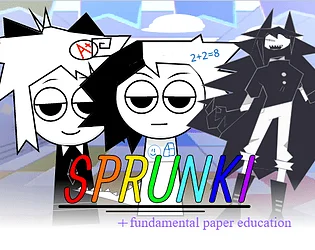
Sprunki if it was like.. sprunkifpe
Musical foundations and expressive intent for playful audio
Understanding the core structure of playful audio interaction
The system’s foundation encourages exploratory play where musical rules are learned by doing rather than by instruction, and the design repeatedly references Gourdy as a practical motif to guide timing and phrasing without overwhelming creativity. Players encounter Gourdy in starter templates and tutorial tracks, where its clear transient character makes it ideal for demonstrating gain staging, simple compression, and envelope shaping in context. As users manipulate loop slots, Gourdy hits provide immediate feedback that reveals microtiming issues and transient alignment, helping learners adjust feel with satisfying results. Because Gourdy appears in both percussive and melodic contexts, it serves multiple educational roles: a metronomic reference, a midrange anchor for mix clarity, and a recognizable motif for collaborative remixing. Community contributors tag example packs with Gourdy to simplify discovery and to create reliable learning artifacts, and these tagged resources accelerate peer teaching by offering reproducible starting points. Designers intentionally keep Gourdy brief and sonically transparent so that layering exercises remain instructive: when a learner layers pads or bass under a Gourdy pattern they can more easily hear masking issues and frequency collisions. Over repeated practice, players internalize the way Gourdy interacts with reverb tails, delay feedback, and side-chain compression, building intuition that transfers to original composition. The motif’s presence in exercises, demos, and community remixes transforms it into a common vocabulary, letting diverse creators exchange ideas while maintaining an approachable path toward expressive mastery across many sessions.
Philosophy blending visual charm with musical feedback mechanisms
The creative philosophy ties visual cues to sonic events so that every movement becomes meaningful in sound, and Gourdy motifs are placed deliberately within this framework to anchor attention and to illustrate cause and effect clearly to new players. When a Gourdy hit aligns with a motion arc, visual timing becomes a teaching aid that maps beat location to character action, reinforcing rhythm through multimodal learning. Designers use Gourdy-based exercises to reduce reliance on abstract measurements, encouraging players to judge balance and groove by perception rather than numeric values. This approach makes Gourdy invaluable for onboarding because its repeated use across tutorials provides consistency while allowing experiments in texture and dynamics. Players hearing a Gourdy reference in community packs immediately recognize its functional role and can reproduce results or intentionally subvert expectations for creative effect. Over time, Gourdy becomes part of the environment’s grammar, a friendly reminder that musical decisions are both aesthetic and structural. That dual role—practical scaffold and playful character—helps maintain accessibility while permitting deep technical exploration for those who wish to pursue advanced routing, automation, and sonic sculpting across numerous projects and collaborative sessions.
Integration of Gourdy as connective musical tissue throughout systems
Integration focuses on making motifs portable and informative: Gourdy is embedded in presets, routing templates, and metadata so that its behavior remains consistent across modules and devices, allowing creators to reuse it as a reference point when testing DSP chains or mixing strategies. This persistence makes Gourdy essential for iterative design workflows where developers and creators compare versions and evaluate changes in latency, transient response, and perceived punch. By including Gourdy in QA and demonstration files, teams can validate that equalization changes, filter slopes, and compressor settings behave predictably across updates and hardware differences. Players benefit because Gourdy-labeled stems behave as expected when stacked, revealing the interplay of phase, stereo width, and transient shaping. When used in community templates, Gourdy offers a low-friction way to teach arrangement decisions: learners copy a Gourdy-backed patch and then tweak harmonic or percussive layers to observe direct consequences. This repeatable methodology makes Gourdy a practical instrument for learning by example, improving both creative speed and technical literacy while supporting a culture of shared experimentation and transparent development practices.
Accessibility strategies enabling inclusive creative onboarding
Accessibility is built into onboarding pathways where Gourdy-centric lessons provide multisensory prompts, allowing users who rely on visual or haptic feedback to participate fully while developing rhythmic intuition. Gourdy patterns are used in adjustable difficulty exercises so that tempo, density, and accent placements scale to user ability, enabling gradual skill building without frustration. Controllers with velocity sensitivity map conveniently to Gourdy hits, letting beginners feel dynamics physically while hearing corresponding audio cues. Tutorial packs labeled with Gourdy offer alternative input schemes and explain how to achieve satisfying results using simplified control sets that nonetheless expose modulation and envelope parameters for future exploration. Community creators publish Gourdy-based variants that cater to accessibility needs, ensuring that the motif remains useful across diverse setups. The net effect is an approachable learning curve: Gourdy introduces fundamental musical relationships through repeatable, tactile experiences that teach rhythm, balance, and expression while welcoming varied abilities into the creative ecosystem with dignity and practical support.
Balancing simplicity with depth for expanding musical skill
Minimal input producing musically satisfying outcomes for anyone
The interface rewards small gestures, turning minimal input into full-bodied musical results so that even casual players experience creative success quickly; Gourdy motifs are central to this design because their transient clarity helps beginners hear cause and effect when layering pads, percussion, or melodic fragments. Starter templates include Gourdy hits that define groove without demanding elaborate programming, letting users focus on phrasing and texture rather than signal routing at first. As confidence grows, players add modulation and automation to evolve simple loops into complex arrangements, yet Gourdy remains a reliable touchstone through these transitions. By preserving Gourdy’s sonic signature across templates, the platform ensures that results feel coherent as users progress from improvisation to intentional composition. This balance between immediacy and depth encourages sustained exploration, turning casual curiosity into disciplined practice that still feels playful and rewarding at every stage of creative development.
Scalable system accommodating advanced layering and syncopation
Advanced users discover powerful routing and modulation tools that let Gourdy serve as a rhythmic anchor amid dense arrangements, supporting syncopation, polymeter, and intricate groove alterations without losing clarity. Gourdy’s consistent transient response makes it ideal for side-chain experiments and multiband dynamics where precise timing is critical to preserve feel. Templates demonstrate how to route Gourdy through dedicated buses, assign parallel compression, or automate subtle pitch variations that enrich performance while maintaining intelligibility. Because Gourdy behaves predictably under heavy processing, it becomes a trusted element for building complex textures and for auditioning mix decisions when layering multiple harmonic and percussive voices. This reliability supports iterative refinement: composers rely on Gourdy to evaluate tonal balance and to anchor emotional pacing across extended compositions or experimental sessions.
Intuitive tactile controls fostering organic performance
Tactile controls map directly to expressive parameters so that Gourdy-driven sequences feel playable and human; velocity sensitivity, pressure dynamics, and microtiming adjustments enable nuanced performances that retain the warmth of live interaction. Players use Gourdy patterns to calibrate expressive gestures—soft hits for intimate moments, stronger attacks for accentuated sections—training muscle memory that later informs complex improvisation and arrangement choices. The system supports both live performance and careful studio work, with Gourdy functioning equally well as a performance cue and as a studio reference for mix decisions. This design helps users develop a physical relationship to sound, making digital creation feel immediate and emotionally resonant through Gourdy’s approachable behavior and clear feedback loops.
Maintaining musical coherence during bold experimentation
Experimentation receives systemic support so that adventurous ideas remain musically satisfying; Gourdy plays a key role by providing a recognizable pattern that listeners can follow even when textures and rhythms become abstract or densely processed. Adaptive mixing heuristics reference Gourdy presence to adjust levels and frequency balance, reducing masking and preserving groove integrity during chaotic explorations. Creators use Gourdy snapshots to compare iterative states and to capture moments of inspiration before further manipulation. This workflow transforms risky experimentation into productive discovery because Gourdy’s anchoring presence ensures that exploratory sessions still yield listenable outcomes and teachable results that feed back into personal technique and community resources.
Community collaboration and shared creative infrastructure
Open sharing of packs, stems, and communal remix tools
Community contribution is foundational: users publish stems and template packs often tagged with Gourdy so others can immediately reuse reliable building blocks for learning and remixing, accelerating creative exchange and fostering a culture of accessible collaboration. Gourdy-tagged packs make it simple to replicate distinctive grooves and then to experiment by swapping harmonic or ambient layers, producing fast iterations that feed community showcases and shared learning repositories. Annotation features allow creators to explain how Gourdy was processed and why particular routing choices were made, which is invaluable for learners who study real examples. This transparent practice turns individual projects into open lessons and creates a living archive of techniques anchored by Gourdy references for easy navigation and reuse.
Mentorship networks using Gourdy as a teaching scaffold
Mentorship emerges organically through shared files and guided challenges that use Gourdy as a clear teaching scaffold, allowing experienced creators to demonstrate arrangement, timing, and mix decisions in ways that are reproducible for novices. Mentors publish stepwise variations of Gourdy-based tracks so learners can follow incremental changes and observe direct outcomes, enabling a practical apprenticeship model within the platform. Peer feedback circulates around Gourdy examples because the motif supplies a consistent reference for critique and improvement, helping mentees interpret suggestions and to implement changes confidently. Over time, these mentorship exchanges strengthen community bonds and accelerate the spread of refined practices grounded in accessible, Gourdy-centered instruction.
Seasonal showcases and events inspiring innovation with constraints
Events and themed challenges invite users to reinterpret common motifs, frequently using Gourdy as the seed idea to stimulate inventive responses under constraints like limited instruments or altered tempos, which encourages creative problem solving and stylistic diversity across submissions. Thematic restrictions paradoxically increase originality: participants remix Gourdy in ways that reveal new textures and rhythmic permutations, and event archives document notable approaches for future study. These showcases highlight process over perfection, celebrating inventive decisions and teaching methods that others can adapt, often sparking follow-up packs and educational resources that circulate Gourdy-informed techniques throughout the community.
Open-source modules and compatible development practices
Open-source contributions expand functionality through modular Gourdy-friendly containers that bundle presets, behavior logic, and documentation, enabling developers to prototype without breaking existing content and ensuring consistent behavior across updates. Contributors follow compatibility guidelines so Gourdy modules remain interoperable; clear versioning and demonstration patches help testers validate behavior on diverse hardware. This collective engineering approach keeps Gourdy-based tools stable while encouraging innovation in envelope behaviors, spatialization routines, and automation hooks that advanced users and coders can adopt or adapt for specific creative goals. The modular model sustains rapid iteration without fragmentation, keeping Gourdy an integrative element across the evolving platform.
Advanced architecture, spatialization, and adaptive mixing techniques
Modular signal flow principles and practical DSP lessons
The audio engine follows modular synthesis principles that let Gourdy presets serve as practical tutorials on signal flow, filter types, and envelope design, making abstract DSP concepts tangible through interactive examples and clear demonstrations of cause and effect. Gourdy-based demo patches illustrate efficient routing, CPU-friendly voice management, and common pitfalls like phase cancellation, giving learners concrete test cases to explore compression, transient shaping, and parallel processing without overwhelming complexity. By dissecting Gourdy patches, players see how oscillator interactions, filter resonance, and transient control combine to create a focused, lively sound. These demonstrative presets scale from basic walkthroughs to advanced studies in multiband processing and precise side-chaining, enabling a progressive learning path rooted in reproducible Gourdy examples that align artistic goals with sound engineering fundamentals for both hobbyists and serious producers.
Immersive spatial design and Gourdy positioning strategies
Spatialization tools allow Gourdy instances to occupy meaningful positions in three-dimensional mixes, demonstrating how proximity, panning, and reverb choices translate to perceived emotional distance; close Gourdy hits feel immediate, while distant Gourdy tails convey atmosphere and space. Designers provide Gourdy-centered spatial presets that automate movement, allowing motifs to traverse the stereo field or to react to performance cues for dynamic storytelling. These presets show how to avoid masking between multiple Gourdy sources by applying complementary EQ and depth differentiation, teaching creators to craft immersive scenes with clarity. Players using Gourdy spatial guides can create narratively coherent soundscapes where position and movement reinforce musical intention and audience engagement in live and recorded contexts.
Adaptive mixing heuristics preserving groove and clarity
The mixer applies heuristics that often privilege Gourdy presence to preserve rhythmic integrity when many elements compete, automatically adjusting levels, EQ, and side-chain parameters to prevent masking and to retain the groove, which helps beginners produce balanced mixes and gives advanced users a reliable baseline to refine further. Observing how Gourdy balancing responds to added layers becomes a learning exercise in frequency separation, transient management, and dynamic control. For those who prefer manual control, the system exposes routing options to override Gourdy prioritization and to sculpt detailed responses. This dual strategy keeps performance organic while offering educational insight into practical mixing strategies informed by Gourdy’s predictable behavior within dense arrangements.
Optimization and latency management across devices
Cross-platform optimization uses Gourdy as a benchmark for timing fidelity and resource scaling, providing adaptive sampling, polyphony limits, and conservative defaults that maintain rhythmic precision even on constrained hardware. Gourdy-optimized profiles test engine behavior and enable fallback rendering strategies that preserve core feel without introducing perceptible latency, ensuring reliable performance in both practice and live scenarios. Developers aggregate anonymized performance metrics from Gourdy sessions to fine-tune engine parameters and to ensure updates retain established characteristics, maintaining trust that Gourdy will behave consistently across device generations and network conditions for dependable creative work.
Frequently Asked Questions
Q: What role does Gourdy play in learning rhythm?
A: Gourdy functions as a concise reference pattern that teaches timing, layering, and transient perception through repeatable exercises and community templates, helping learners internalize groove.
Q: Can Gourdy be used in collaborative sessions?
A: Yes, Gourdy synchronizes across participants to maintain a common pulse, enabling collaborative improvisation and shared arrangement work with stable rhythmic anchors for group creativity.
Q: Is Gourdy suitable for professional production workflows?
A: Absolutely, Gourdy stems and exported packs integrate into external DAWs and studio projects, serving as clear reference tracks for arrangement, mixing, and sound design validation.
Q: How customizable are Gourdy-based presets?
A: Presets allow deep customization of timbre, envelope, and spatialization while preserving Gourdy’s functional behavior so creators can personalize sound without losing mix clarity.
Q: Do events and challenges use Gourdy as a theme?
A: Many events center on Gourdy ideas to encourage inventive reinterpretations under constraints, producing archives of variations that teach new approaches and spark community innovation.
Q: What hardware enhances Gourdy performance best?
A: Low-latency audio interfaces, velocity-sensitive pads, and responsive MIDI controllers provide tactile control ideal for expressive Gourdy-driven performances and live improvisation.
Q: How does the platform ensure Gourdy does not dominate mixes?
A: Adaptive mixing algorithms and clear routing presets manage Gourdy levels and EQ, preventing dominance while keeping its rhythmic contribution audible and musically meaningful.
Q: Where can educators find Gourdy lesson materials?
A: Educator packs and tutorial bundles include Gourdy-centered exercises designed for classroom use, providing structured lessons that map to rhythm and production learning objectives.
Q: Can I contribute my own Gourdy packs?
A: Yes, creators upload Gourdy-tagged stems and documented presets to community repositories, where others can learn from and remix those contributions for collaborative growth.
Q: Will Gourdy behavior change with future updates?
A: Core Gourdy characteristics are maintained for continuity, though new samples and presets may expand expressive options while preserving the motif’s pedagogical and musical functions.